For years it was the wild west. Now there are actual rules. Sort of.
Intro
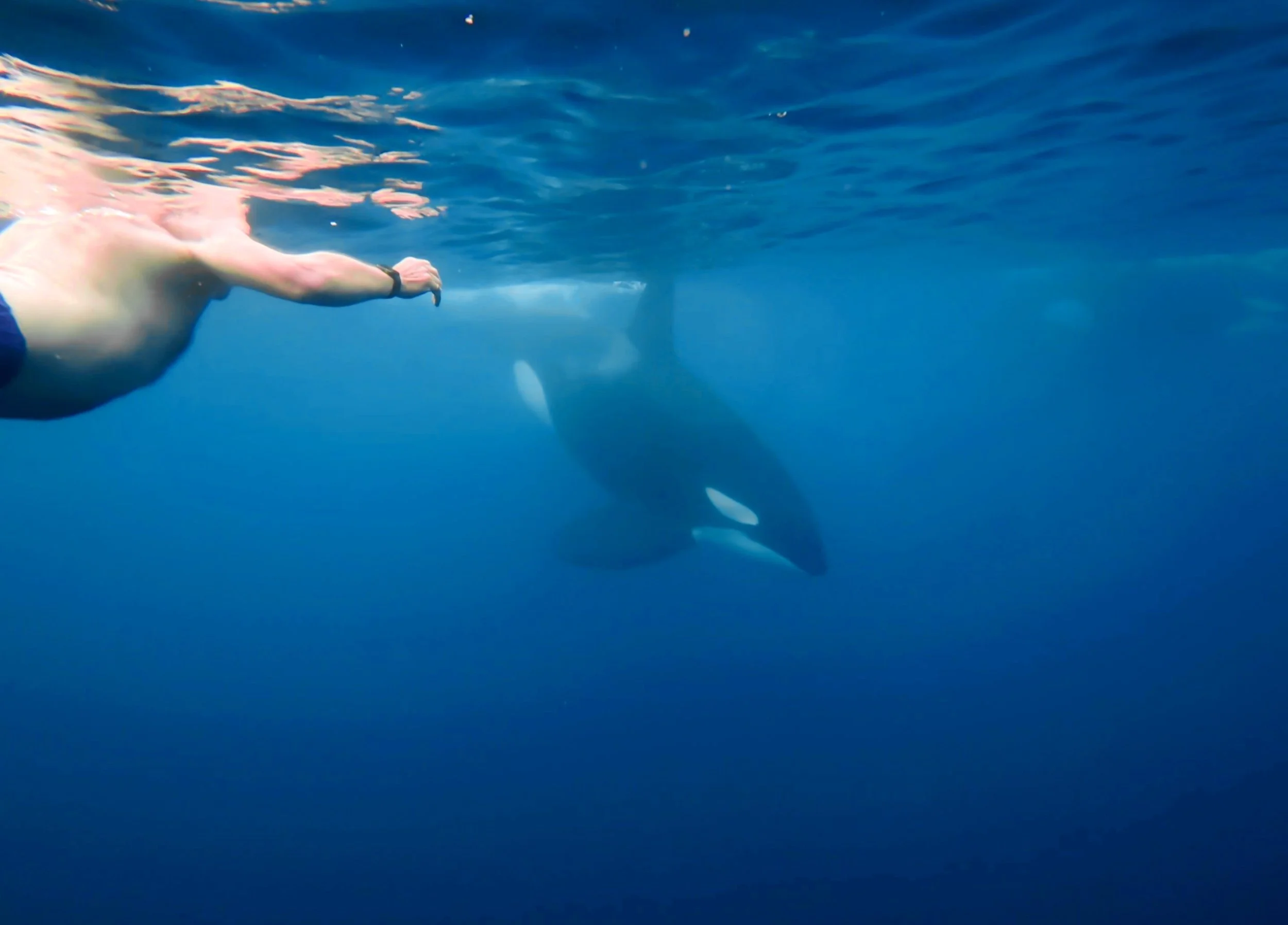
Before social media got hold of it, orca encounters in La Ventana were a quiet, almost underground thing. Small numbers of ocean enthusiasts, word spreading through tight-knit groups, a WhatsApp message here and there between people who genuinely cared about the animals. When orcas showed up, a handful of boats would find them. The interactions were calm. Nobody was racing. Nobody was selling anything. Just people who loved the ocean, sharing something extraordinary with each other on a small scale.
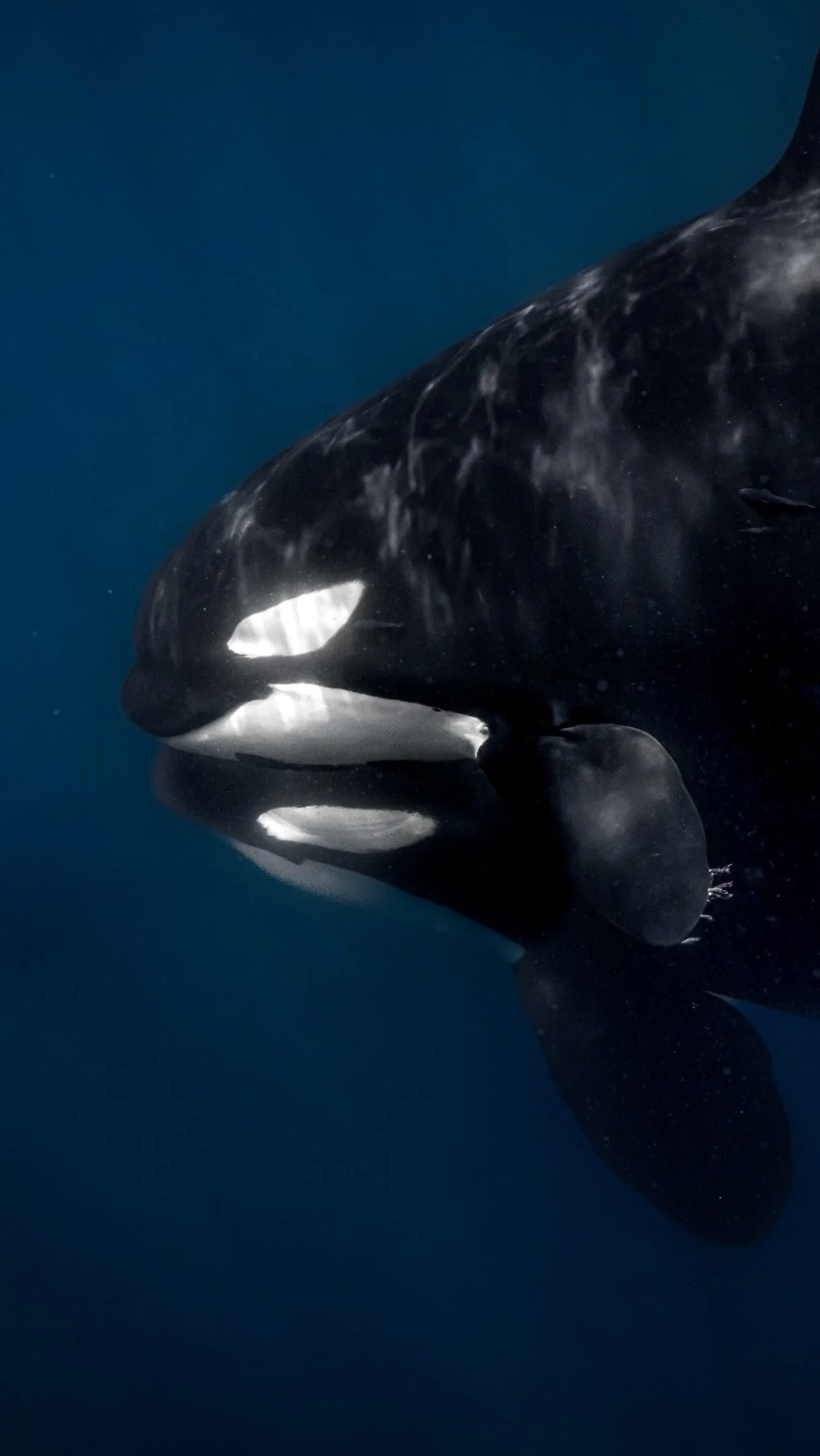
Then the area blew up. And honestly? We're not surprised. How frickin incredible and life-changing is it to be in the water, face to face with the ocean's number one apex predator?! Of course it went viral. Of course everyone wanted a piece of it.
But for about the last four years, swimming with orcas in Baja was a legal grey area held together with vibes, WhatsApp groups, and the collective hope that nothing would go catastrophically wrong. It was, to put it mildly, a mess. Boats chasing pods. Up to 34 boats reportedly circling a single family of orcas at once. Tourists in the water who couldn't swim properly. Operators selling "guaranteed orca swims" to people who should have been sold a life jacket and a book about managing expectations.
Then, in July 2025, SEMARNAT (Mexico's environment ministry) finally dropped the hammer. Or at least, a small hammer. Plan de Manejo Tipo para la conservación y aprovechamiento no extractivo de la especie Orcinus orca (PMTO) became the first formal regulation for orca tourism in Mexico. It's imperfect. It's temporary. It's the best thing that's happened to the La Ventana orcas in years.
Here's what it actually says, what it means for you as a guest, and what the regulations can't fix no matter how much we'd like them to.
The basics: what the regulation is and isn’t
The Plan de Manejo Tipo Orca (PMTO) is a one-year pilot running from 1st August 2025 through 31 July 2026. It will likely be extended or updated after that, but as of writing, we don’t know what happens after July 2026. If you’re reading this in the middle of 2026 or later, double-check with us or SEMARNAT directly — rules in Mexico change, sometimes quickly.
The regulation applies to a specific geographic polygon of roughly 110,906 hectares covering the La Ventana bay, the Cerralvo channel, El Sargento, Agua Amarga, Ejido Juan Domínguez Cota, and Los Planes. That’s a lot of ocean. But it’s also a specific area. Outside this polygon — so, for example, if you’re in Loreto, Cabo Pulmo, Espíritu Santo, or Bahía Magdalena — there are currently no specific orca interaction regulations in place. Which is another conversation for another day.
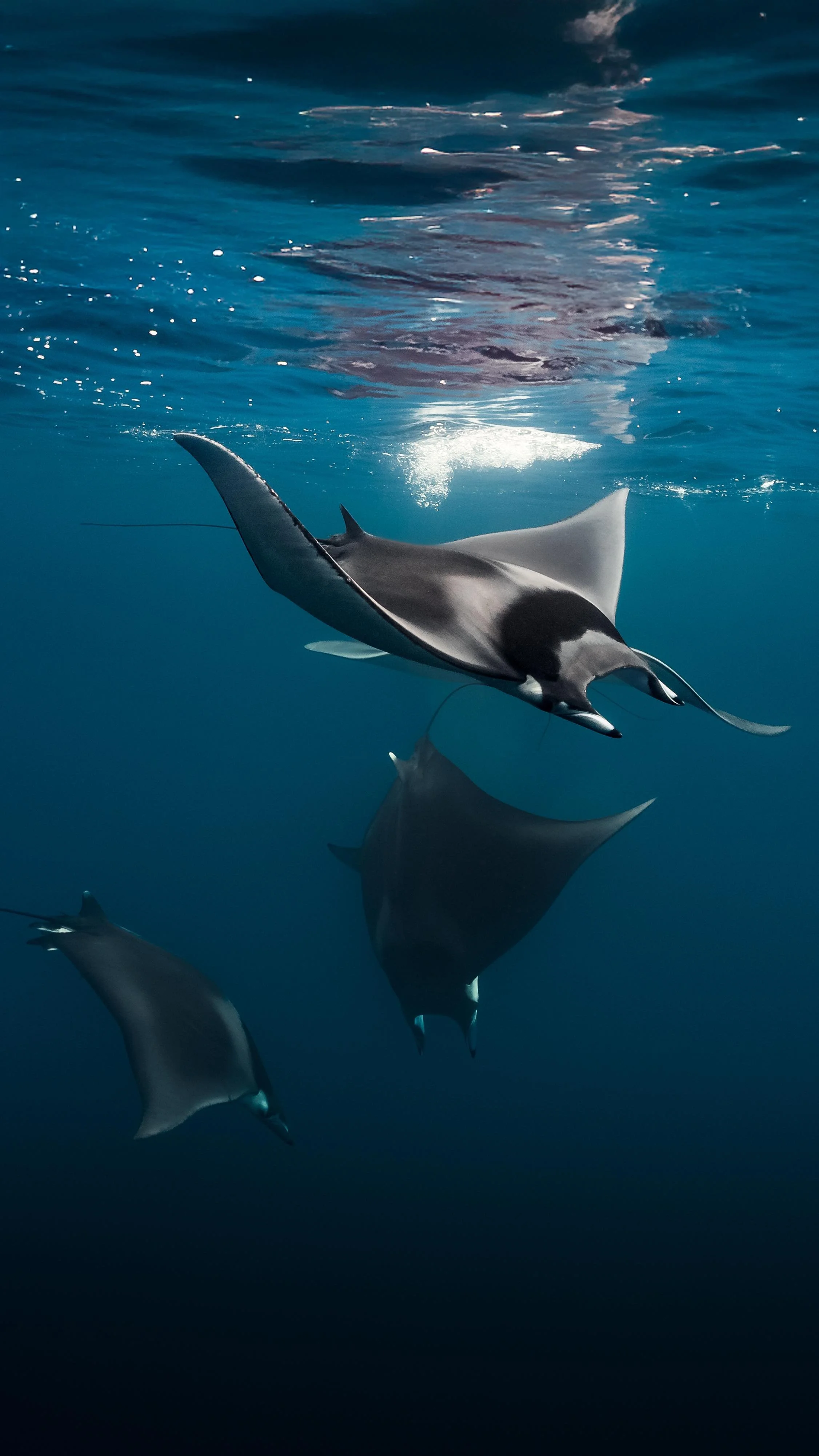
And one more thing worth flagging up front: the plan regulates orca interactions only. It doesn’t apply to mobula rays, whale sharks, dolphins, or any other species. Although authorities have said (not in writing) that if you do have the Orca permit then other species will fall underneath it until there are permits for all other species. Orcas being an important first pilot, which makes it even more important not to mess it up.
The rules, in plain English
Boat limits
Maximum 24 boats per day in the orca zone, divided into 3 shifts of 8 boats each across the day.
Only one permitted boat per captain. Operators can work with multiple captains, but all must have the orca permit.
Boats must be under 10 metres / 32 feet. No big liveaboards or pleasure craft joining the party.
Our take: The restricted number of boats is a good idea, this needs to happen, however the 3 shifts of 8 boats model doesnt translate well to orcas in practise. This was lifted from the plan de manejo for whale sharks in La Paz, in an area where the sharks are consistently feeding. Orca are completely different and travel hundreds of miles in a day, they can show up anywhere any time, and are often not seen for weeks on end.
Approach distances
Initial approach distance: 100 metres.
Wait distance: 60 metres. (Boat must hold here and let the orcas decide what to do.)
Closest approach: 20 metres, but only if conditions are right and the orcas aren’t stressed.
If orcas come closer on their own — which they often do — engines must go to neutral. Don’t chase. Don’t manoeuvre.
Our take: Solid rules, this is similar to in the French Polynesia how the boats cannot approach closer than 100m of the whales. This is great for allowing the whales the space and time to swim away if they do not want to interact.
In-water rules
ALL BOATS MUST HAVE A GUIDE that has completed the Orca permit course in La Ventana. Only 4 swimmers + 1 guide per boat can be in the water at once.
Maximum 30 minutes per boat with any given pod.
Minimum one hour between boats interacting with the same pod. No back-to-back stacking.
Maximum 2 boats around a pod at any one time.
Swimming is only permitted when orcas are socialising or feeding on small prey (under 2m - rays, mobulas, turtles). Not when they’re resting, hunting large prey (over 2m), or transiting.
No touching, no feeding, no drones, no loud sounds, no sunscreen on your skin, no motorised propulsion devices. Surface swimming only — no scuba, no freediving.
Swimmers must be adults in good health, sober, not under the influence of anything.
Our take: Completely agree that all boats must have a guide - doing this activity without a guide in my eyes is stupid! What if there is an accident in the water and you have no guide? The experience itself is so much better when an experienced guide tells you the correct way of interacting with orca. Staying calm and not chasing, where to be in the water etc makes the experience so much more enjoyable.
The number of swimmers in the water could be up to 6 + 1 guide. We believe that yes the 4 + 1 is less people in the water and is less impact, however the main impact is actually how you behave in the water. 1 person with bad practises - freediving down in front of the orca, chasing them, dropping too close, etc is way more intrusive than a group of 6 people that have been given a thorough briefing and strict guidelines on how to interact with orca. ALL of our guides go through thorough training and have experience around the world with other species and not just orcas. At the same time, it’s important to be clear that these limits are part of the official regulation, and we operate within them.
No matter how experienced a team is, any interaction with wild animals has some level of impact. The goal is to keep that impact as low as possible.
One thing that may be hard to distinguish, is the difference between the different behaviours of orca. Some are easy, such as hunting large prey (classed as over 2m). If you see orca chasing at high speed, no in water interaction is allowed. A more difficult scenario is hunting Mobula rays (smaller than 2m) the hunts can be fast paced and chaotic, but they can also be slow paced due to their incredibly orcastrated (see what I did there!) hunts. So this could fall into a middle ground for the rules. Another is socialising or transitioning. Slow moving orca traveling in the same direction could be socialising and/or transitioning together, so the speed in which they are travelling needs to be judged by the guide to determine the difference, but could also be interpreted differently.
The use of drones really helped determine the behaviours of the animals but in the plan de manejo this has since been prohibited around orca. Which we agree to some extent, we believe that only trained professionals under the operators team can fly, not just any Tom, Dick or Harry joining an expedition. We have seen so many inexperienced “pilots” flying with little to zero experience or awareness and this is a harm to all. We believe prior permits should be available for operators.
Operator requirements
SEMARNAT permits issued through the Dirección General de Vida Silvestre (DGVS).
Operators must undergo annual training in water rescue, first aid, and first responder protocols.
Boats must carry GPS tracking, a first-aid kit, waste containers, and a visible identification banner so authorities can spot who’s permitted from who isn’t.
Operators must submit annual reports on sightings and encounters.
Our take:This is fine, and will hopefully help filter out the people working without the correct permits and people coming for a short time without permission to work, doing whatever the F they want with the animals and then leaving with no care in the world, and us operators that are here all year round have to pick up the pieces.
Operational hours
7:00 AM to 6:00 PM, weather permitting.
Each boat gets up to 4 hours on the water for observation and swimming activities.
Our take: Operational hours are fine and gives the orca time to rest. The 4-hour limit, though, doesn't reflect the reality of finding orcas in the wild. On most days it takes hours of searching and significant distance covered before you even locate a pod. Sure you may get lucky and find them within the first hour, but more often than not it takes hours and hours of searching with many kilometres travelled. Let’s say you put the time and effort in to finding them, and you find them in the last 10 minutes of the 4 hours, you're expected to report the sighting and leave so that other boats who've been sitting around waiting for exactly that report can benefit from your effort. There’s something not quite right about that.
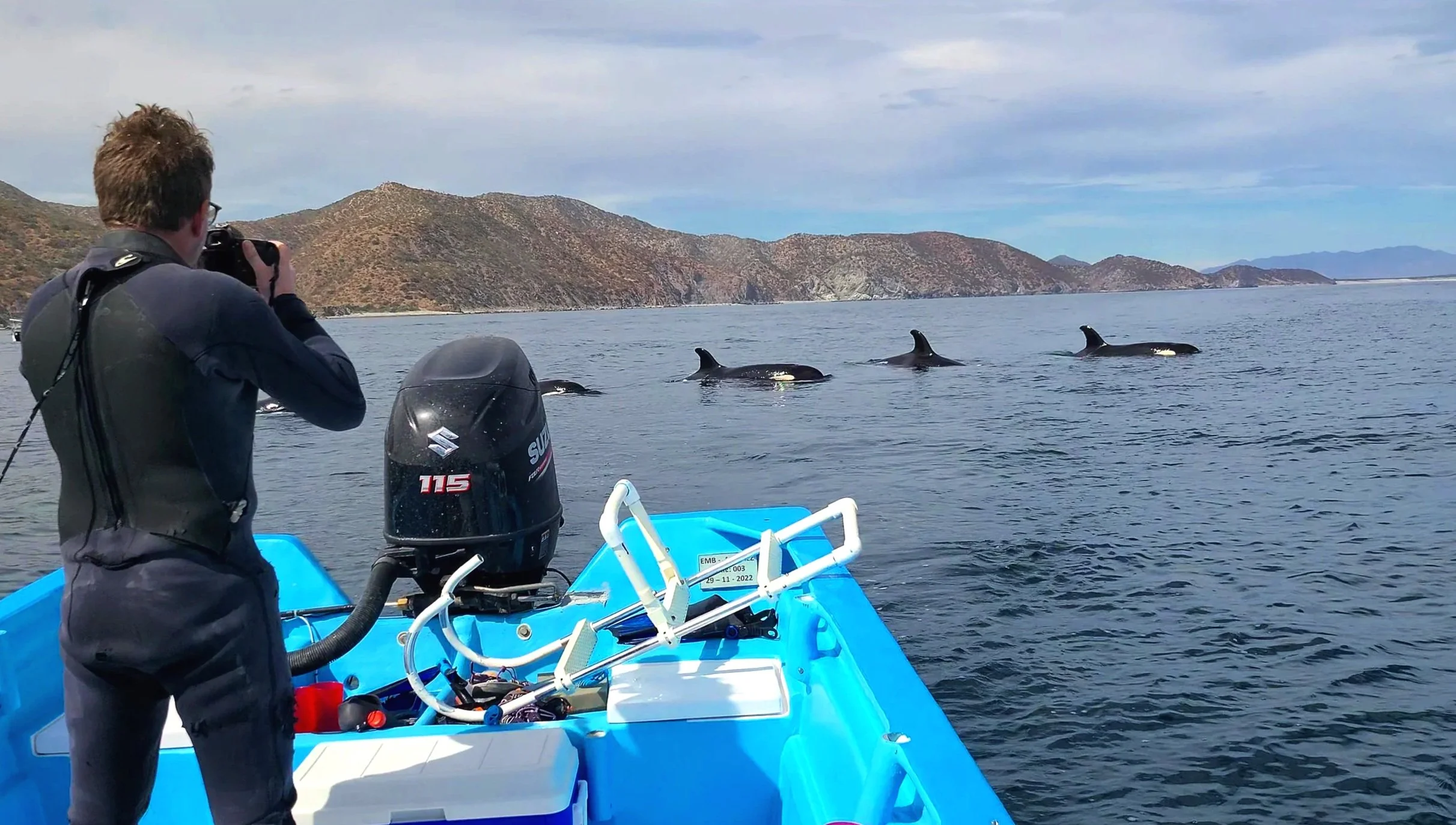
Sometimes the view from the boat is just as good as from the water!
What the regulations fix (and what they don’t)
Let’s start with the good: the plan does a lot of the right things. It caps boat numbers, which helps prevent the 34 boats around one pod scenario. It gives animals time to rest between interactions. It puts a permit system in place that in theory can be revoked if operators break the rules. It requires trained crews. It draws a line in the sand and says: this is how we do it from now on.
That’s a big deal. Four years ago, none of this existed.
Now the harder truth: a regulation is only as good as the people following the rules, its enforcement, and enforcement in the middle of the Sea of Cortez is genuinely difficult. There’s no orca police checking everyone at all times, and we don’t want that. And the rule that says “only interact when orcas are socialising or feeding on small prey” requires real-time behavioural interpretation — which is hard even for experienced biologists.
Then there’s the demand side of the problem. Now that there are actual permits to swim with orca, the expectation of seeing the orca automatically goes up. Guests keep showing up expecting “guaranteed” orca encounters, operators will keep feeling the pressure to push limits. Regulations on paper can cap boats per day. They can’t cap the internal pressure on a captain who knows his client paid $3,000-$4000 and hasn’t seen an orca and is leaving tomorrow. That’s a social problem, not a legal one. Which is what most of our other Orca article is about
What this means for you, the guest
Before you book any orca experience in Mexico, check these five things. If the operator can’t or won’t answer clearly, walk away.
1. Are they permitted?
Ask directly: “Do you hold a SEMARNAT permit for orca observation and swimming under the 2025 Plan de Manejo?” If the answer is anything other than a clear yes, you’re dealing with someone operating outside the legal framework.
2. What’s their orca encounter policy?
A good operator will tell you what they do when they find orcas that aren’t in a swimmable state (resting, hunting big prey, moving with young calves). A bad operator will dodge the question or promise “we always get people in the water.”
3. How do they find orcas?
Good operators search independently, travel further, and don’t ONLY chase reports. They definitely don’t just sit in the bay waiting for someone else to find a pod and then burn across the water stacking on top of it.
4. What happens if no orcas show up?
Ask this. The answer reveals everything. If they tell you about all the other wildlife you’ll potentially see mobulas, dolphins, whale sharks, sea lions, whales etc… good. That’s a sea safari operator. If they try to reassure you that they “always find orcas,” run.
5. What’s actually included?
Cheap orca tours often quote a headline price that doesn’t include park fees, guide fees, taxes, equipment, lunch, or transfers. You arrive, and suddenly a $200 day is actually $340 and you’ve somehow still ended up on a crowded, rushed boat. We broke this down properly in how to choose a responsible operator in La Ventana- worth a read before you book with anyone, ourselves included.
Our honest take
Full disclosure: We would have preferred a space where everyone follows good practices with all of the animals and self policing so that the rules and permits didn’t need to be put in place, since this pushes costs and prices up for everyone and can make it unaffordable for some… but as humans we can’t have nice things, so now we have to have tight regulations. Since this, we think the Plan de Manejo is generally a good thing. Baja Wild Encounters operates within it, we welcome it, and we think the industry will hopefully be better for it. We have already seen a positive change in the interactions, which is great, and we always run our tours and expeditions by not chasing and harassing animals, so the new regulations don’t make a huge difference to our approach.
But I’d also say this: Don’t confuse “there are rules now” with “everything is fine now.” The rules are a framework. They’re not a magic wand. They work when operators respect them, when guests arrive with realistic expectations, and when enforcement actually happens.
If you only want to see orcas
One more time, because this matters: if orcas are the only reason you’re travelling halfway round the world, don’t come to Baja. Come for the full sea safari, with orcas as a possible bonus. For the dedicated orca experience with consistent sightings, multiple pods per day, proper winter Arctic drama, our partner company One Xpeditions runs the Norway Herring Run expedition specifically for this.
FAQ
Is swimming with orcas legal in Mexico?
Yes, under the SEMARNAT Plan de Manejo Tipo para la conservación y aprovechamiento no extractivo de la especie Orcinus orca (Orca) a través de la observación y nado, en la región de La Ventana, Baja California Sur (Aug 2025 – Jul 2026), but only in the defined La Ventana zone, only with permitted operators, and only under the specific conditions set out in the plan.
How many boats can be near orcas at the same time?
Two. Maximum. Not twelve. Not four. Two.
Can I freedive or scuba with orcas?
No. The plan permits surface swimming only. No fins-down descents, no scuba gear, no breath-hold dives under the pod.
What if I’m not a strong swimmer?
Then you shouldn’t be in the water with orcas. The rules require adults in good health, and that’s for your safety. You can still observe from the boat, which, honestly, is sometimes the better view anyway.
Is this regulation permanent?
No. It’s a one-year pilot. It will likely be renewed or updated after July 2026, but the exact form of any future regulation is unknown. We need to really work together in following good practises with the orca because the government could easily prohibited the activity for the following year.
JOIN US!!
If you want to experience the Sea of Cortez properly — sea safari, all species on the table, orcas if the ocean decides to gift us a pod — join our Mobula Ray Migration expedition (April–June) or the Sea of Cortez Expedition (July–August). 7-day is the sweet spot. If you want a much higher chance of orca density, head to Norway with One Xpeditions instead.
Check out our Wild Encounters on Instagram