Intro
Every year we get the same kind of message. Guests finish the trip, head home, and within a day or two we get a note. It usually starts the same way:
"I can't stop thinking about..."
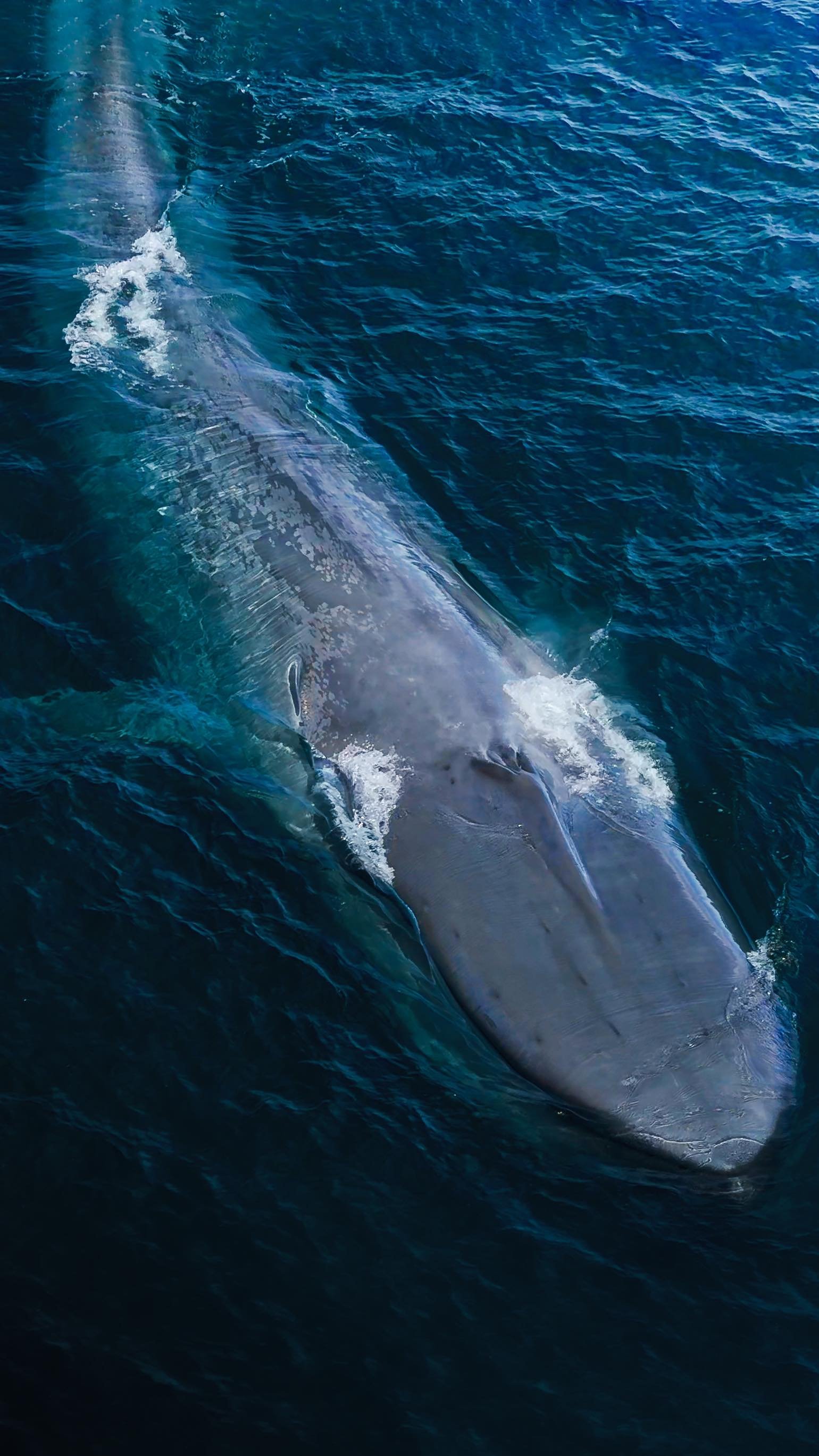
And then it's not the mobulas. It's the blue whale that surfaced 30 metres from the boat. The whale shark that hung around for an hour. The pod of spinner dolphins that wouldn't leave. The sperm whale click-communication they heard through the hull.
The mobulas were incredible. The mobulas are always incredible. But the mobulas aren't usually the thing that stays with people afterwards.
This is the part of our Mobula Ray Migration expedition that doesn't fit neatly into a booking page or a title. It's also the reason we keep telling people the trip isn't really an orca trip, it isn't really a mobula trip, it's a sea safari. The Sea of Cortez is one of the most biodiverse marine environments on Earth, and when you spend five days out on it, you see that biodiversity in full.
Here's what we actually see.
The species list (and what the encounter is usually like)
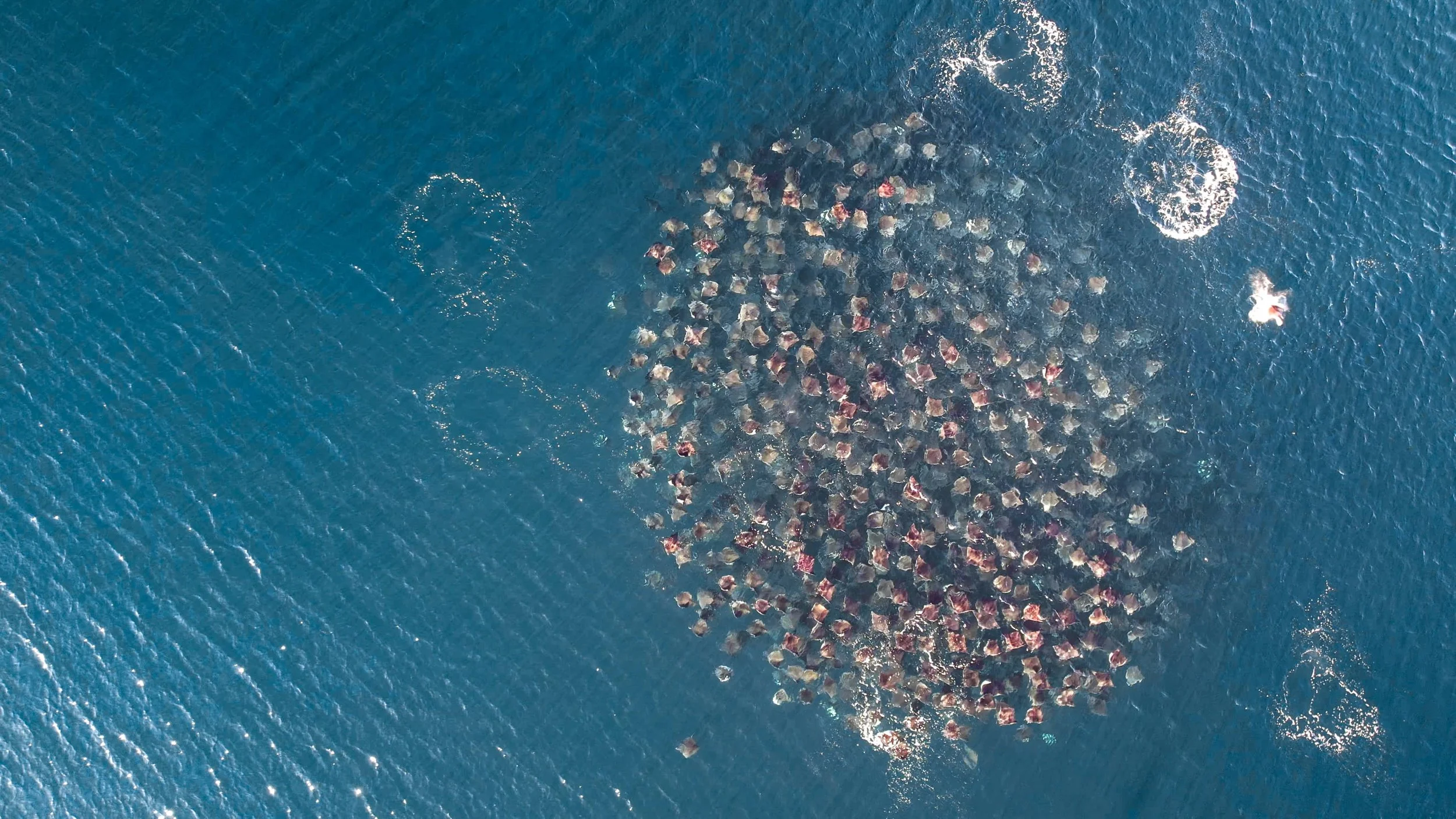
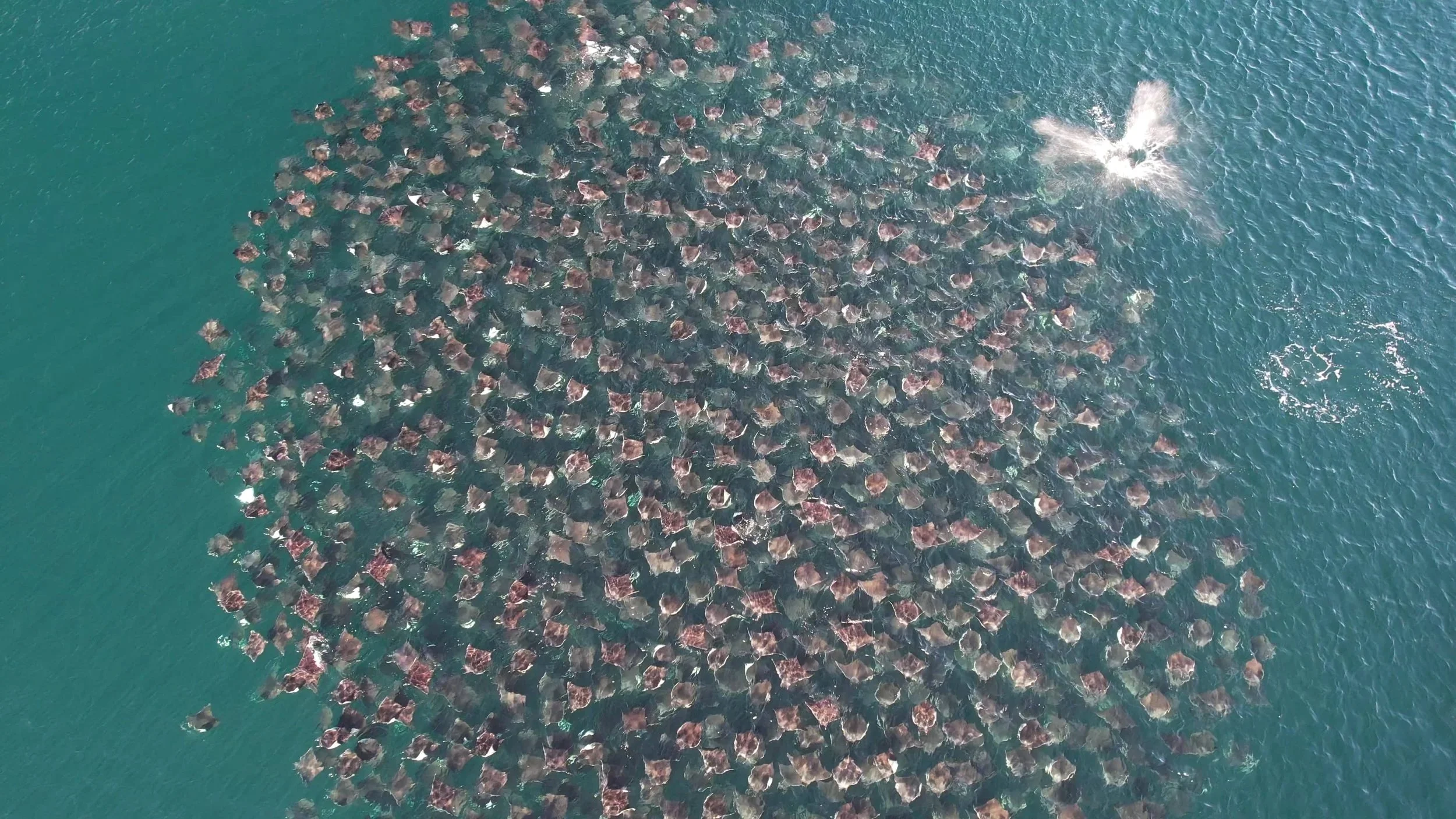
Mobula rays
The main event — the reason the trip exists. In peak season you can watch fevers of thousands, sometimes tens of thousands, flying through the water. Most encounters are from the boat or by drifting quietly at the surface while they pass beneath. When conditions are right and the guide reads the fever correctly, in-water encounters happen. The rays themselves are shy, so close encounters come from stillness, not chasing. A full breakdown in [How to Correctly Interact with Mobula Rays](/blog/how-to-interact-with-mobula-rays).
Dolphins
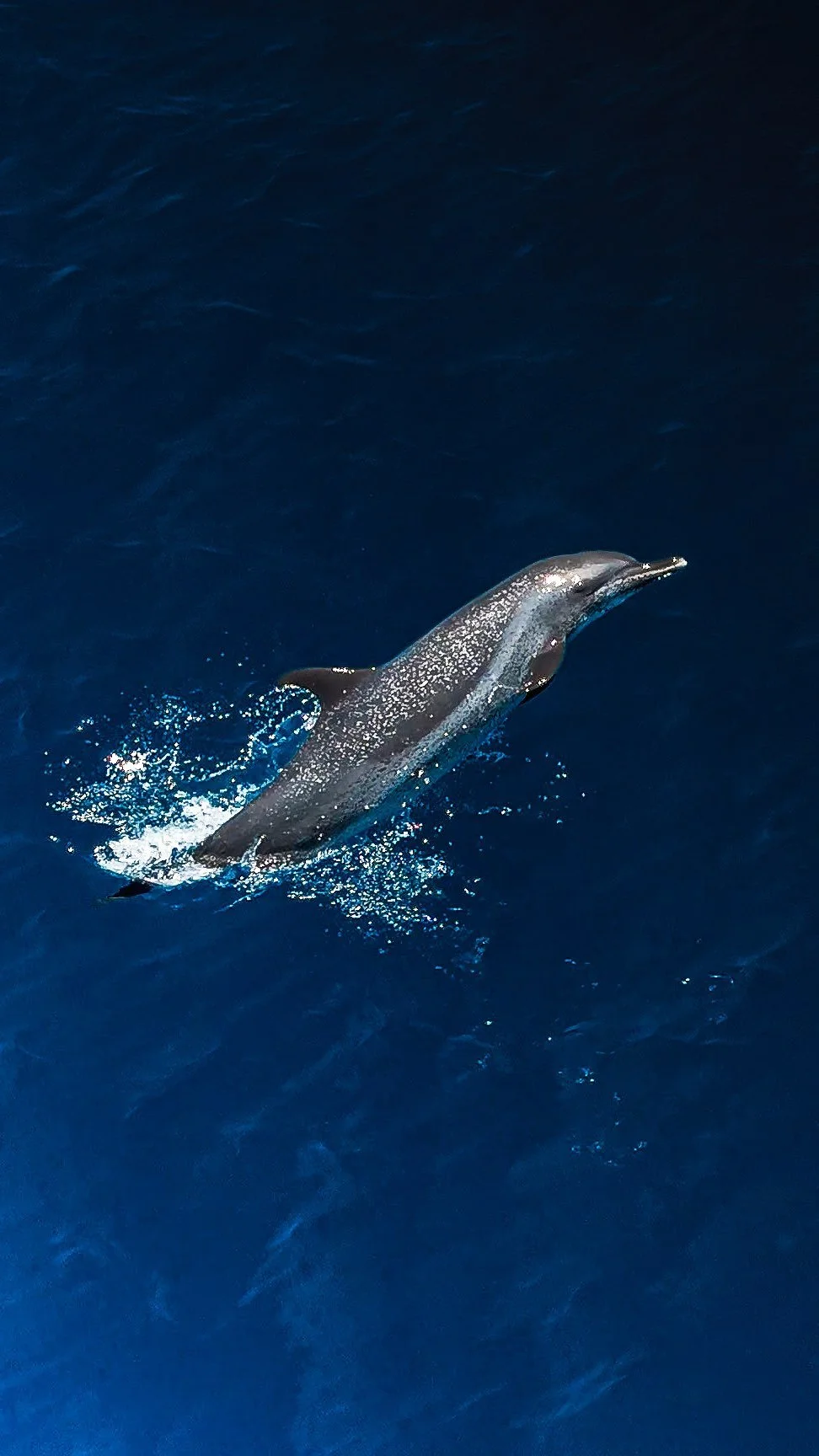
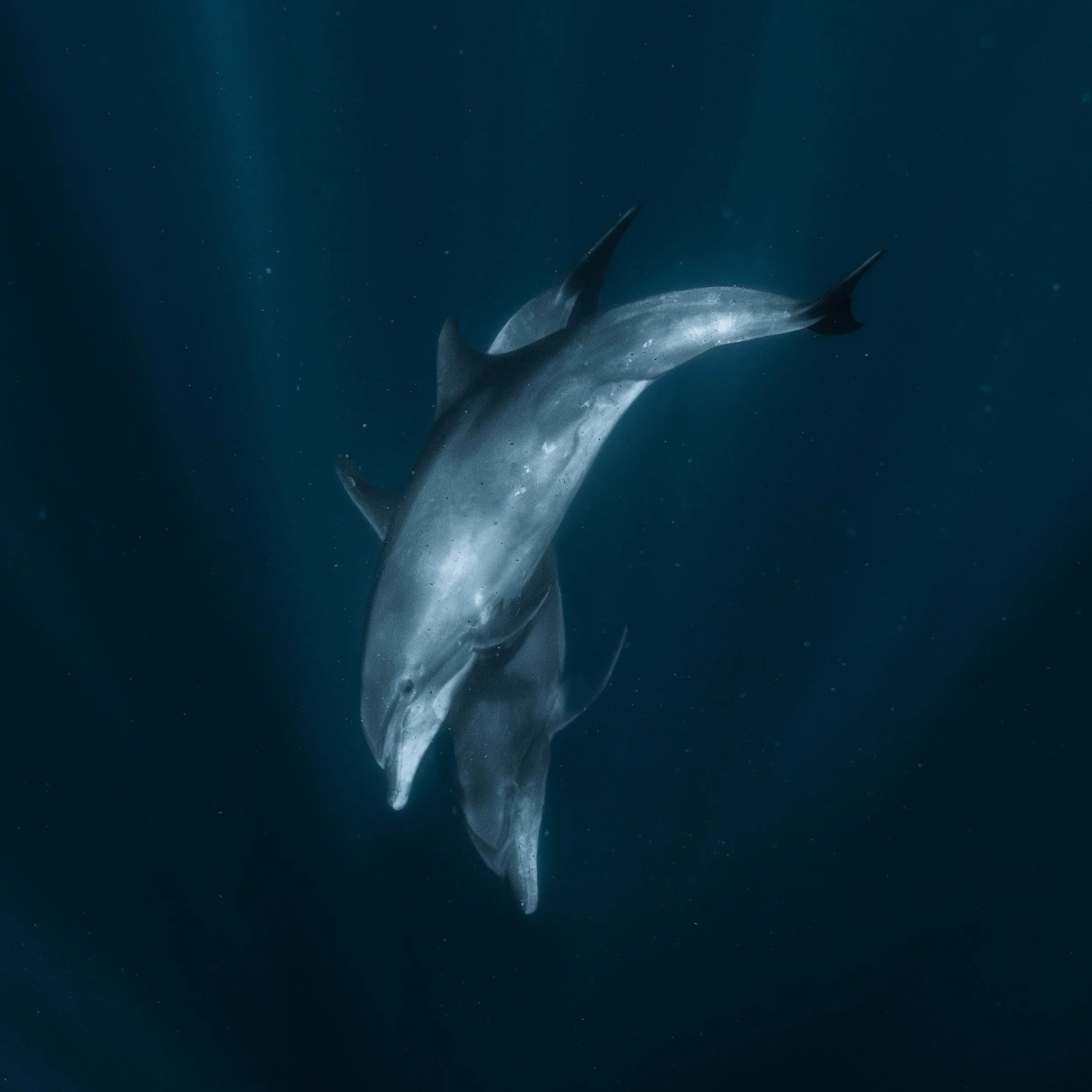
This is the species that surprises people most. During a typical expedition, you're likely to encounter at least two or three dolphin species. Bottlenose, common, spinner, pantropical spotted, rough-toothed — different species show up in different areas and times. Pod sizes range from a handful to several hundred strong, its not super uncommon to see megapods of thousands together. Dolphins in the Sea of Cortez are often extremely active around boats, and because we don't rush them or chase, they often stick with us longer than you'd expect.
Worth noting: bottlenose dolphins here behave quite differently from bottlenoses in French Polynesia or the Bahamas or Rangiroa or Revillagigedo. Every population has its own personality, its own tolerance, its own social patterns. Our guides know the local pods well enough to recognise which ones are curious and which ones want space.
Whale sharks
The biggest fish on the planet. They pass through the Sea of Cortez seasonally, and we've had encounters during the Mobula Expedition every season, but not every week. A whale shark encounter is typically slower and more peaceful than some of the faster swimming animals — they move at their own pace, they don't care about you, and if you float alongside quietly, they often stay for a long time.
Whales
Here's where the expedition really shifts from "mobula trip" to "ocean trip." During peak mobula season, you might encounter:
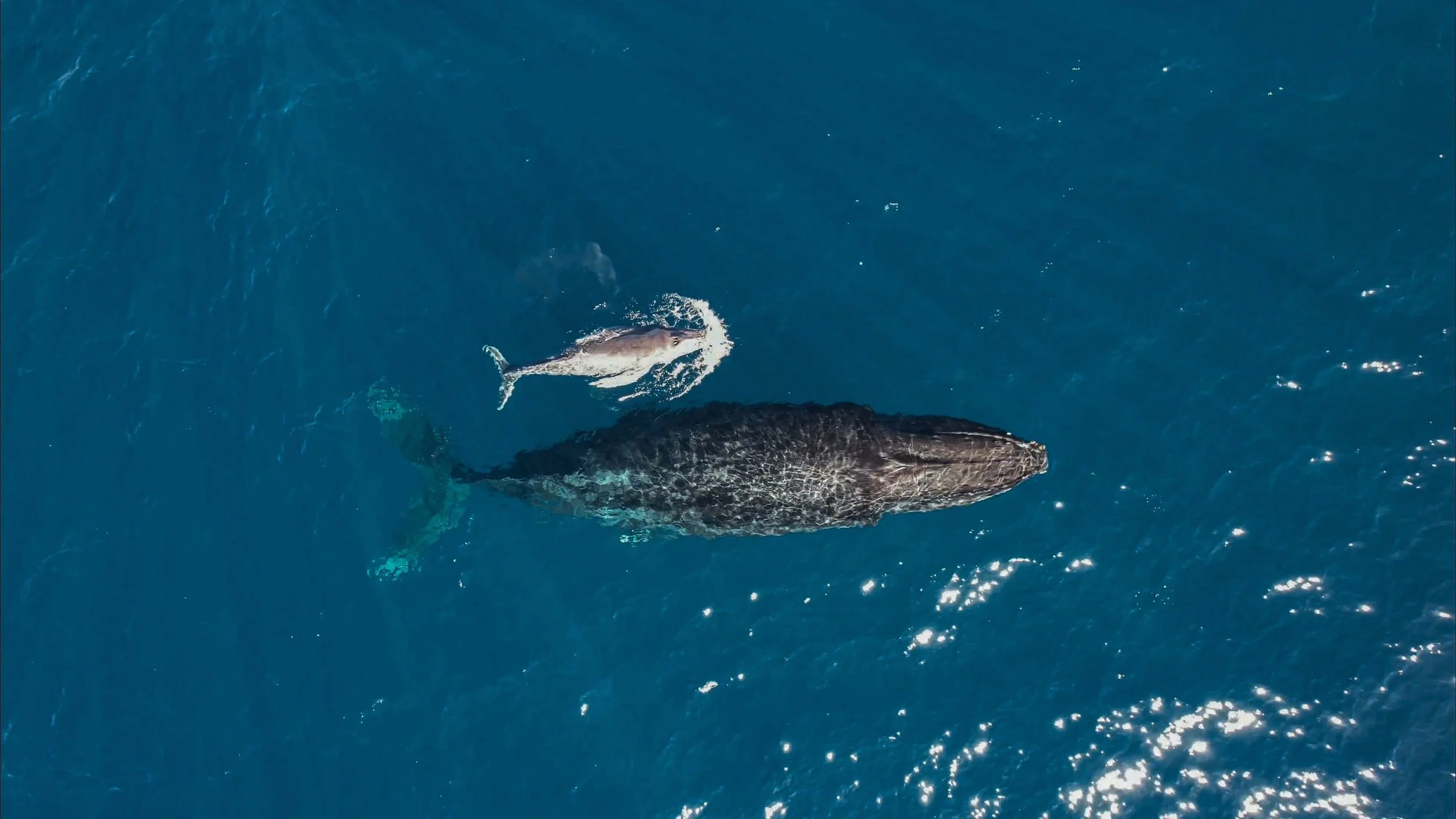
Humpback whales — particularly in the earlier part of the season as they wrap up their southern stay, singing, breaching, and if really lucky coming to take a closer curious look of the weird happy aliens on the boat.
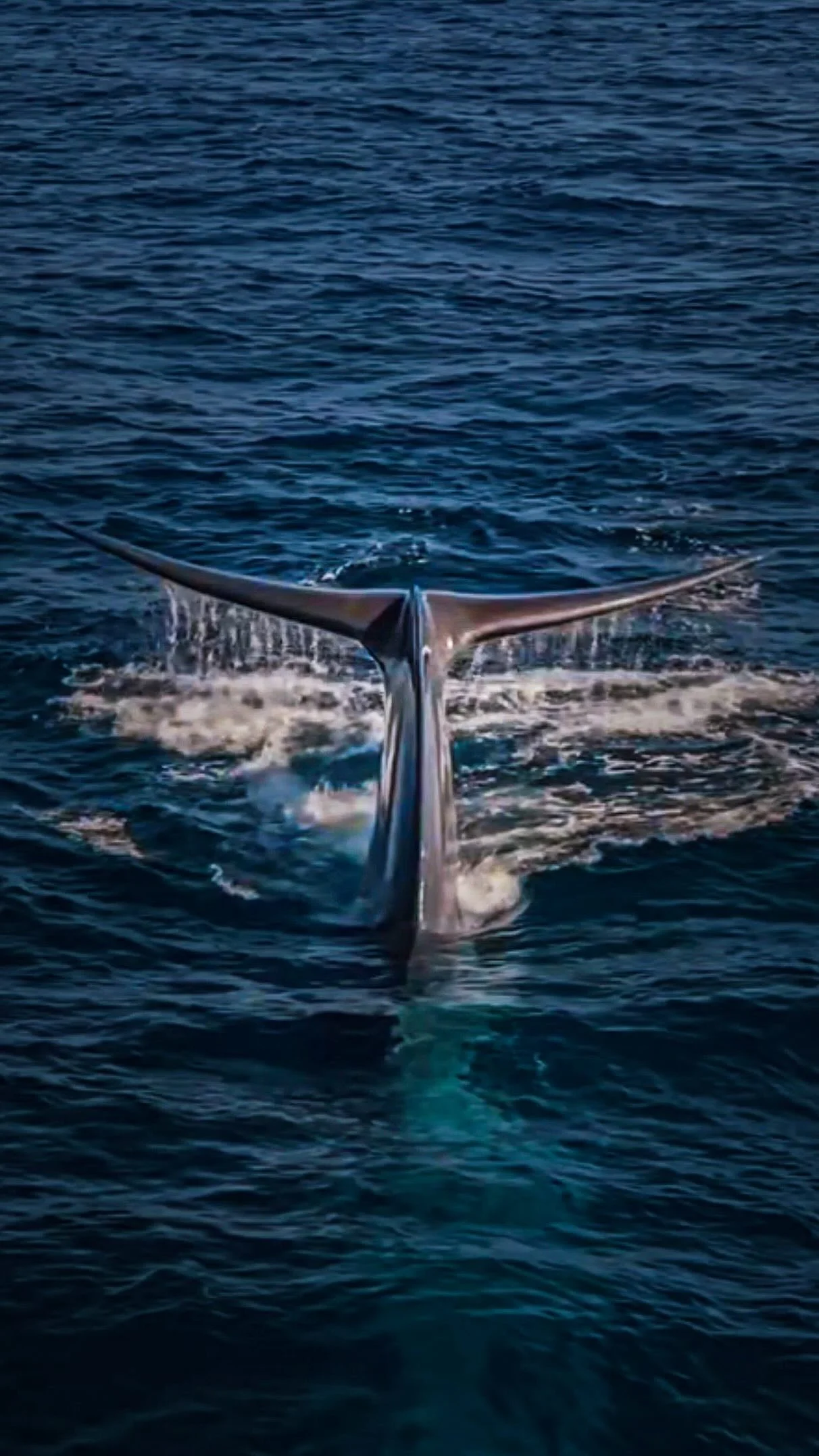
Blue whales — the largest animal that has ever existed (33.8m the largest ever recorded) and the Sea of Cortez is a known feeding area. Blue whale sightings aren't daily but they do happen.
Fin whales — second largest whale species (up to 27m). Less dramatic at the surface than humpbacks but unmistakable once you see one. Not very common around La Ventana, so a great treat to see them.
Sperm whales — occasional, deep-diving, you'll often hear them on the hydrophone before you see them.
Bryde's whales — regular presence, often feeding through the surface near bait concentrations.
Minke whales — the smallest of the baleen whale found in the Baja waters. Distinctive by the white patch on their pectoral fins, a rare sight in La Ventana.
Any of these on any given day is not guaranteed. All of these across a 7-day trip is genuinely possible.
Orcas
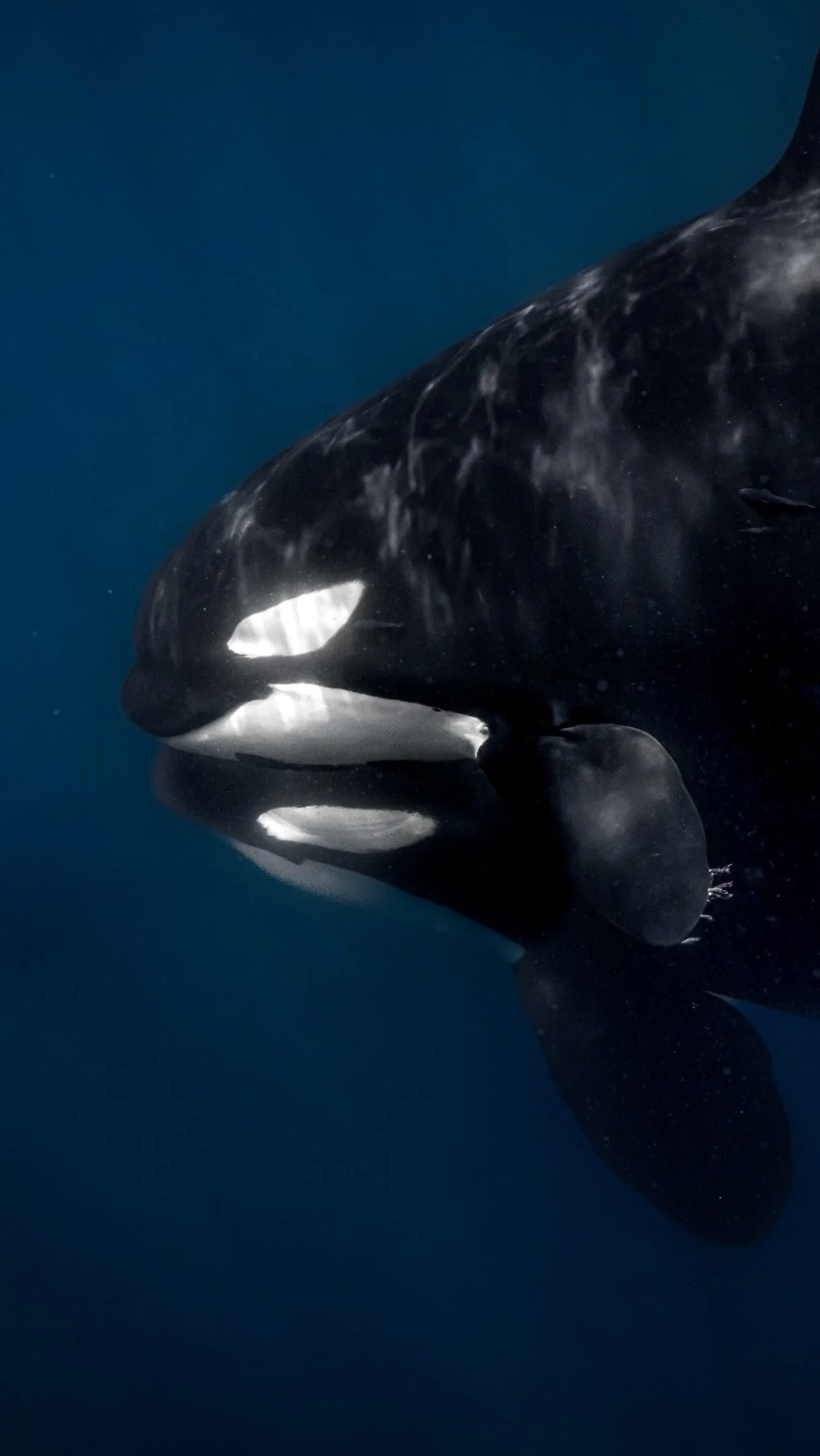
The famous one. Sightings happen roughly 10–15% of boat days during peak season. When they appear, they're often hunting mobulas, which is the extraordinary behaviour that put the Sea of Cortez on the orca map. But don't build your trip around them. If orcas are the only reason you're travelling, book Norway with One Xpeditions instead.
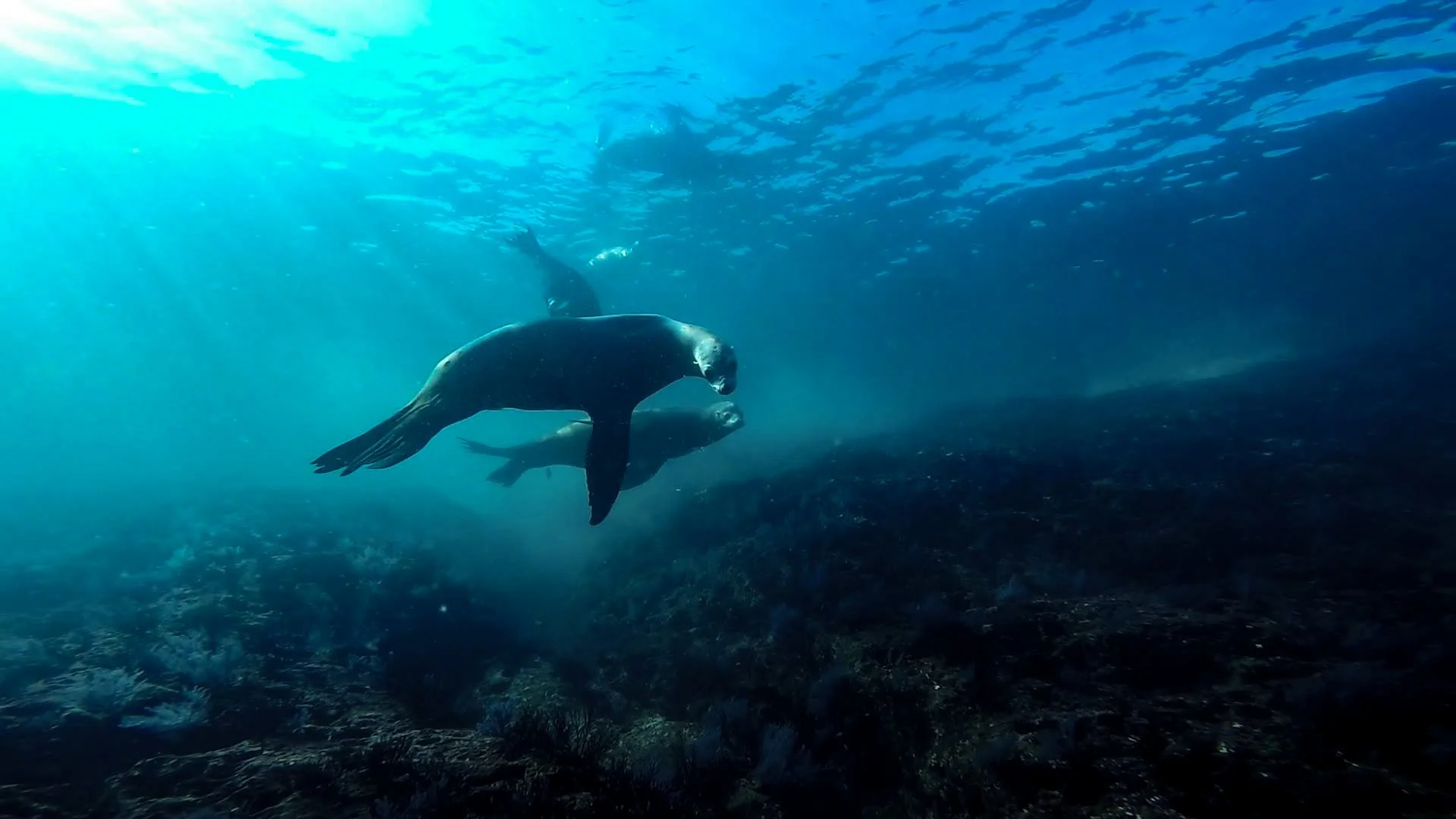
Sea lions
Not exotic. Not rare. But almost universally the funniest animals you'll meet on this trip. Colonies at nearby islands (La Reina and Los Islotes is the most famous) offer snorkelling with sea lions that is genuinely playful — pups will approach divers, mouth fins, perform acrobatic twists three feet from your mask. Big males usually keep their distance, but occasionally will come by with loud barks. Females are the more playful of the adults, often swimming close and dancing, but the young ones are curious to a level that gets cartoonish. Most guests end up with more sea lion photos than mobula photos.
Oceanic manta rays
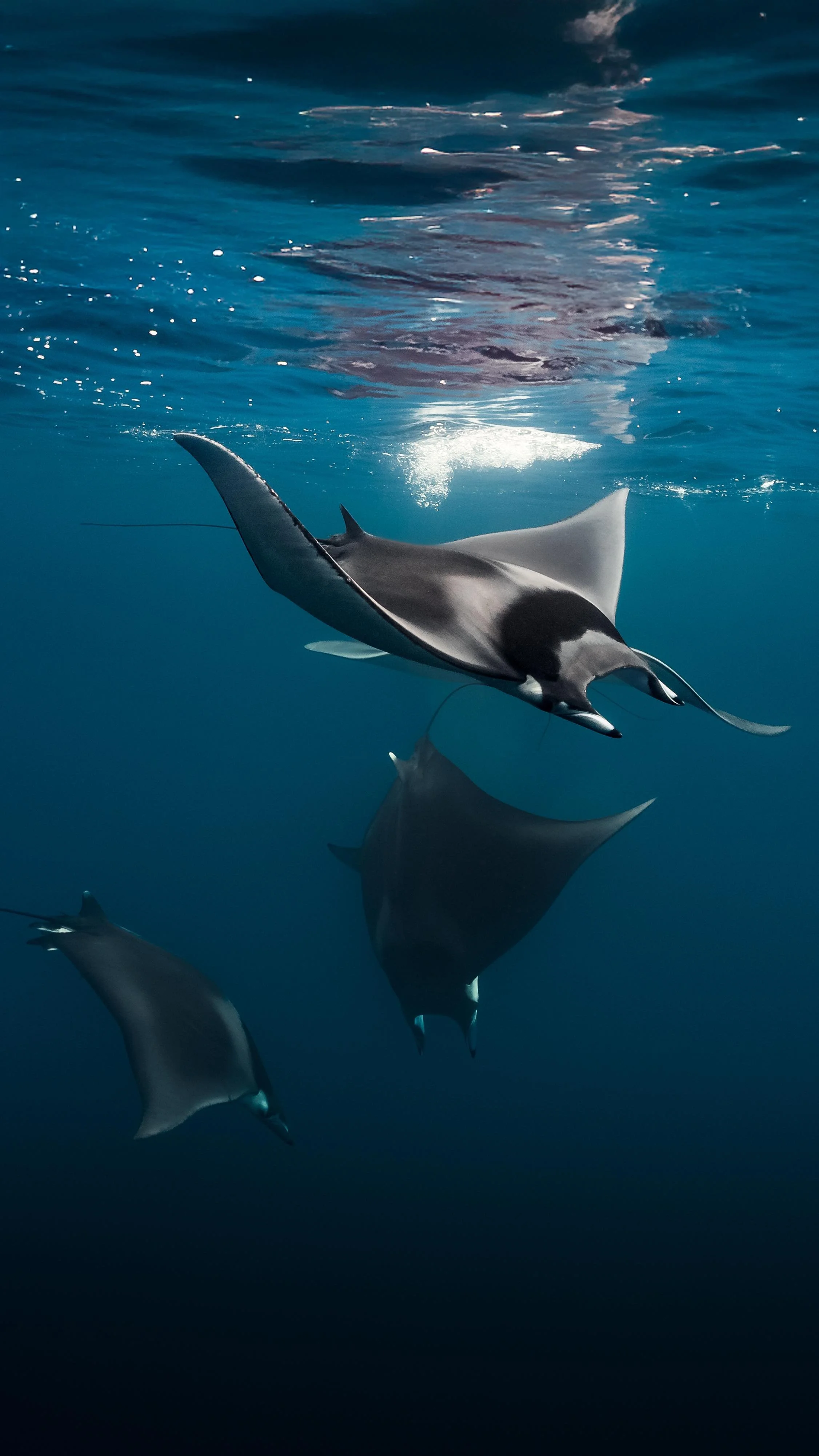
The bigger cousin of the mobula. Individual encounters, not fevers, but sometimes there can be multiple in the area. Giant Pacific mantas can have wingspans of 7+ metres. They're less common during peak mobula season than the mobulas themselves, but a manta encounter when it happens is unforgettable. The clearer, more dedicated manta experience is on our Socorro Islands Liveaboard and Sea of Cortez Expedition.
Sea turtles
Olive ridley being the most common, then green, loggerhead, and hawksbill turtles can be seen in the area too, and if you are extremely lucky, the elusive leatherback!
Pilot whales and false killer whales
Both can appear. Pilot whales tend to travel in stable pods and are more common in the summer months, false killer whales are more sporadic. Neither are common enough to build expectations around, but they do show up.
Sea birds
The unsung stars. Following a flock of feeding birds is one of the best ways to find wildlife action below the surface. Frigate birds, boobies, brown pelicans, terns, gulls — if you see a cluster of birds working the water hard, there's likely some action below them and likely predators feeding underneath.
Beaked Whales
Probably the more rare encounters that we have here. Often very short and from the distance. Rare chance of spotting Cuvier's, Baird's, pygmy, and Peruvian beaked whales. Beaked whales are the deepest diving of the cetaceans due to their main diet being deep squid — the Cuvier's beaked whale holding the record of 2,992m (9,816ft) and a 222 minute breath hold!



Why we try to frame this as a sea safari, not an orca tour
A species tour is what a lot of competitors sell. "Swim with orcas." "See orcas in Baja." It's effective marketing because it creates a clear, desirable outcome in the buyer's head. But it also sets up most guests for disappointment, because nature doesn't deliver on demand.
A sea safari is different. The goal isn't one species. The goal is the sea. You go out every day, you search, you see what the sea shows you. Some days are mobula heavy. Some days are whale heavy. Some days you spend hours watching a single massive blue whale cruise along the surface while dolphins fly around the bow. Some days the unexpected thing is the thing you remember forever.
When you book the expedition with sea safari expectations, every encounter feels like a gift. When you book with single species expectations, everything that isn't that species feels like filler, and sometimes a disappointment. Some locations around the world the realistic chance of seeing more than just one main species is slim, but in Baja, the diversity is insane!
We'd rather our guests arrive ready for the first version.
The crowd problem (again)
There's a real operational reason we emphasise the sea safari framing, not just a philosophical one.
As the mobula migration has become more famous, the number of boats on the water during peak season has grown significantly. Popular reported fevers can have 10 or more boats converging. When that happens, the mobulas get pushed deeper and the encounter deteriorates. This is why operators like us who travel further, search independently, and go to less-crowded areas find better wildlife moments — not just for the mobulas, but for every species. Quieter water means more relaxed animals means longer, more intimate encounters.
If you book the cheapest operator in La Ventana, you'll likely spend your day with too many people in the boat, ten other boats stacked on the same reported sighting. If you book with operators who go further, you'll see more of everything. We've covered this properly in How to Choose a Responsible Operator in La Ventana — worth reading before you book with anyone, including us.
What guests tell us after the trip
Some of the actual responses we've had from guests over the years, paraphrased:
"The mobulas were crazy but the blue whale is what I tell people about."
"I didn't expect to care so much about sea lions."
"We didn't see orcas. I thought that would ruin it. It didn't."
"The whale shark was the most peaceful animal encounter of my life."
"Sea lion pups are basically underwater puppies and I wasn't prepared."
"I really did not expect to see that many species, I know on social media it shows a lot but that was insane."
That last one really says it all.
How to maximise the safari on your trip
A few practical things:
Book the 7-day, not the 5-day. More days, more species chances, more weather windows. The 5-day works if you can't stretch to seven. The 7-day is where the sea safari really opens up.
Bring extra binoculars (we have a pair on the boat). A lot of the magic happens 100 metres from the boat. A decent pair of 8x42 binoculars will dramatically change what you notice.
Pack your camera mindfully. Wide-angle lens for mobula fevers, something longer for whales at the surface. Underwater housing for in-water moments. See our Mobula Expedition Packing List when it's published.
Keep a light journal. Sounds corny. Isn't. Guests who track species day-by-day end up with a much richer memory of the trip than those who try to rely on photos alone.
Don't compare to other people's Instagram. Your trip will be different. Different days. Different areas. Different species. Different weather. That's the point! Plus, many people don't post the same day they see something, things can be posted from previous days or even weeks. We tend to delay posts so that we don't drive too many people to the area — for example, if there are orca in the area, we don't want another repeat of 30+ boats on one pod.
FAQ
Is it still worth going if we don't see orcas?
Yes. F*** yes. Most guests who see no orcas still rate the trip as one of the best of their lives.
How many species should I realistically expect?
Across a 7-day trip during peak season, it's common to see 8–12 different species in meaningful encounters. Some trips deliver more. Some deliver fewer.
Which month has the most species diversity?
May through mid-June tends to be the peak overlap — big mobula fevers, active dolphins, whale sharks still around, and some late-season whales still hanging in the area.
Can I do this as a day trip?
Not at expedition scale. We offer shorter experiences — see the La Ventana Snorkel Tour] — but the multi-day expeditions are designed specifically for a better more varied experience, not just a species checklist. Expedition days are longer, and we travel further. On day trips we often visit the same area due to many people wanting to encounter the Mobula Rays. On Expeditions if we have seen the Mobula Rays multiple times we may skip them and search for other bucket list species.
Join us!!
Come for the mobulas. Stay for the blue whale you didn't expect. Book the Mobula Ray Migration expedition— April through June, 7-day recommended, small groups, sea safari mindset.
Check out our Wild Encounters on Instagram